
The other part me is dreading it: do I really want that shrub there? Is that tree really dead? Why did three of that variety die but the fourth is just fine? Sometimes I'm a little envious of people who just have grass in their front yard..... in spite of the fact that that's what I had when I started.
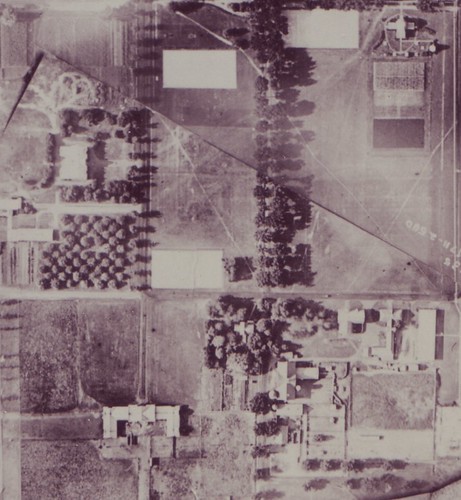 |
| "Urbana, IL Mumford House and South Farms 1918" Image courtesy of army.arch via Flickr |
Why Do We Have Yards?
Seems like a silly question, but considering that urban planners are trying to get suburbanites to do without them, perhaps we should at least review.Farms
In the country, yards were the interstitial & surrounding areas of a homestead and its assorted outbuildings like barns, sheds & stables. A homesteader or farmer would typically plant trees to protect from winds, and grasses to alleviate wind erosion and dust storms. A courtyard would often be established: an exterior space that was also protected. Animals and people could be defended against thieves and predators by their proximity.
 |
| city park in Batumi, capital of Adjara, southwest Georgia Image courtesy of vampa_ via Flickr |
Parks, Air & Light
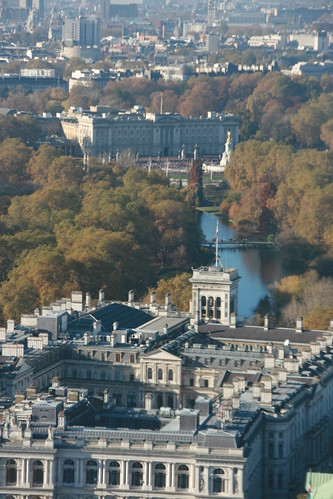
In the city, paved courtyards were a reprieve from intense density where sunlight and fresh air were largely absent. Occasional parks (which for a very long time were only for the wealthy) could be the only source of plant-generated oxygen. Today parks are typically referred to as "green space" in planning language and are valued mainly for these reasons.
"San Francisco Earthquake and Fire April 18, 1906."
Filmmaker unknown.
Courtesy of the Library of Congress
Courtesy of the Library of Congress
Fires
And don't forget about the spread of fires. The Great Chicago Fire of 1871 was started in the O'Leary's barn, whether by their cow or not. The San Francisco fire of 1906 was started by an earthquake. Many other less famous fires ravaged towns when a small fire would spread, usually through flammable building/roofing materials and close proximity. |
| 1911 Sanborn Fire Insurance Map of a part of my neighborhood. Pink is brick/masonry; yellow is wood; "D" is for dwelling. Distances between buildings are shown in feet. The number of storeys is also indicated with a "1" or "2." |
Why Today?
If you were to ask me why I (in particular) have a yard, I wouldn't give you any of those answers, though. I'd tell you that I moved from an affordable and awesome Victorian flat downtown that we restored/remodeled to a neighborhood-with-parks and houses-with-yards for one reason: children. |
| A slightly blurred picture (to protect the sweet innocents) of what we call the "sprinkler dance." |
We also have a front yard. We've slowly been transforming our front yard from an uneven lumpy grass- & weed-fest to a garden of mostly native plants. We also plant vegetables and I dare anyone to have tastier strawberries than our tiny little guys. Only about 2/3 or our plants come back each year, but it's a wonderful journey to learn about soil and compatibilities and what works and doesn't work.
Why do YOU have a yard?
Can We Do Without Yards? (And Why Would We Want To?)
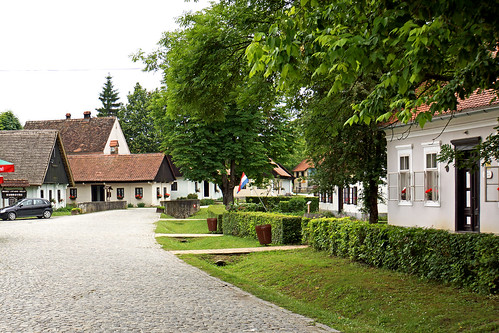 |
| "Village of Kumrovec," Croatia Image courtesy of archer10 (Dennis) via Flickr. These homes are separated from the road by only a ditch, a strip of lawn (almost a park strip) and a row of shrubbery. |
Save Water & Money
1/3 of residential water use is for landscaping our yards. This does not include what farmers use for irrigation. It's mostly for maintaining grassy lawns. Click here for a short video on conserving water if you DO have a lawn.Save Time & Money by Eliminating your Front Yard
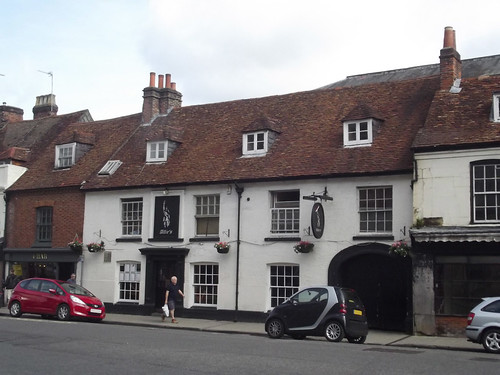 |
| "Alfie's - High Street, Winchester" Image courtesy of ell brown via Flickr Instead of having side yards, these buildings share a parti wall and are built all the way up to the sidewalk. |
Increasing Land Values
In areas where there are steadily increasing land values, open space for parking or yards eventually disappear. As an individual, you can buy more house if you don't have to pay for as much land.
Would YOU consider eliminating your yard?
Front Yards vs. Back Yards vs. Side Yards
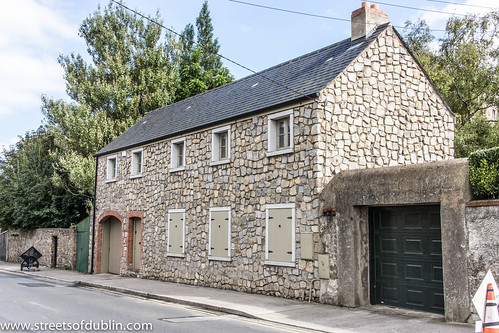
"Pakenham Road, Monkstown," South Dublin
Image courtesy of infomatique via Flickr.
No front yard, but significant side & back yards.
To recap, my simplified view of yards is this:
- front yards are typically for the benefit of your neighbors, but are not meant to be used
- side yards help with privacy between neighbors, but they're not the only tool for that
- back yards are an extension of the living space that you call home
|
| "Pakenham Road, Monkstown," South Dublin Image courtesy of infomatique via Flickr. No front yard, but significant side & back yards. |
To recap, my simplified view of yards is this:
How is a Yard different from a Garden?
Yards are typically enclosed, and associated with a specific purpose and building(s). A garden exists for its own purpose, namely the plants that it houses. I guess my goal is to turn my front "yard" into two "gardens:"


- 75% indigenous shrubs, trees & flowers that (once established) are low maintenance and provide habitat for what little wildlife we have here, like bees, butterflies, ladybugs, birds, etc.
- 25% vegetable garden as I learn what will grow here. A lot of this process is what we can eat raw or know how to prepare. For example, I can grow cucumbers, but they're nasty and bitter (ew).
Many people would consider the front yard a silly place to grow vegetables. Others think it's a WONDERFUL idea. It replaces a useless front yard with an edible front garden.
What do YOU think? Too utilitarian?
Cheers,
ally
What do YOU think? Too utilitarian?
Cheers,
ally



No comments:
Post a Comment