Showing posts with label architects. Show all posts

HOUSE AND HOME


Architect Peter Eisenman famously does not live in a house that he designed himself.  
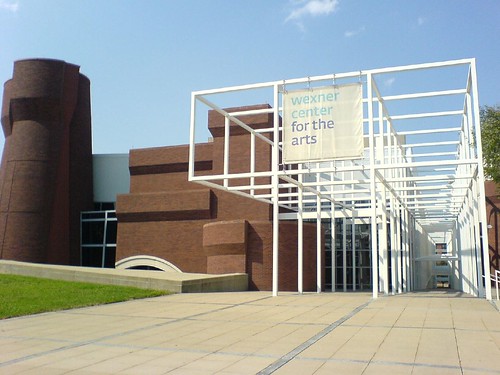
Wexner Center for the arts, Columbus, Ohio
by Peter Eisenman (1989)
Image courtesy of TijsB via Flickr
“Architects design houses,” Eisenman said. 
“I live in a home.”  

Presumably, this distinction helps to explain Eisenman’s living arrangements. Most architects of his stature live in houses that they have designed and whose designs are published widely, but he divides his time between two homes, neither of which he designed and neither of which has been published.

Eisenman characterized one home as “a dumb little apartment” in New York City with “a kitchen that’s not comfortable for two people to be in at the same time.” He characterized the other as a “wonderful old New England house, made of stone, brick and tile,” which was an 18th-century mill and is built over a waterfall. “No architect has ever worked on it,” he said. “You couldn’t design like this. It happens over time,” as successive owners altered it to meet their needs.

Offering an explanation for his housing choices, Eisenman said, “I am immersed in architecture all day, working in my office or teaching.” Afterwards, “I want to go back to my home, where it’s cozy.”

See the full article by Katherine Salant (The Washington Post, April 29, 2011).

Huh?


Artists' Handmade Houses
a book by Michael Gotkin, 2011
I wonder what the architectural profession has become if people--even architects--don't want to live in overly designed spaces.

According to Eisenman in the article above, a home is
  • made of handcrafted materials,
  • built over time, and
  • cozy.

I'd like to add a few of my own.  A home is also
  • a comfortable place to relax and put your feet up,
  • welcoming to guests, and
  • an authentic place where real life is visible, not hidden.

A home is not
1964 Fridge Decor
Image courtesy of x-ray delta one via Flickr
  • perfectly organized and decorated,
  • perfectly clean at all times,
  • a work of art ready for a magazine spread,
  • a gallery for works of art, nor
  • a museum of residential architecture.

Our Home


Our home is constantly in a state of change.  It was built in 1906 with very traditional materials: a sandstone basement, brick exterior walls, and frame interior walls with wood lathe and plaster.  And it has seen many changes over the years, including a second storey apartment added in the 1950s.  

our 1906 house in 2006 when we bought it,
exactly 100 years old
What's horrifying to me about it is the alterations that were done in the 1980s, that decade of DIY courage and ignorance!
This was after the common wisdom of how buildings are put together had died out and before the birth of Youtube.  Home improvement was still happening, encouraged by the expansion of home improvement chains.  I'm often nervous to open up a wall from this period, worried that I'll discover the whole thing was held together with wood glue and peanut shells...

But back on point, this home has developed over time before we bought and since.  We didn't have the funds to do a complete overhaul when we bought it, so we are approaching it one space at a time.  Living here has imparted a much more in-depth sensitivity to what it could be; what it wants to be; what it needs; what we need as a family.
Handcrafted Modern by
Leslie Williamson, 2010

Building a Home Over Time


I often think about how generations past
almost always built their homes over time.  Start with a two-room cabin, then an outbuilding or two, then a lean-to addition, etc.  

People built what they could afford to pay for, even if that was only two rooms.  They typically built it themselves with locally available materials and help from extended family and community.  Their mortgage was often on the land and not on the building.


Early Mortgages in United States*

Kidner House, Nelsonville, Ohio
Image courtesy of gb_packards via Flickr

Prior to 1916, national banks as well as many state banks were prohibited from making 
real estate loans. “Even after 1916, many commercial banks refused to make real estate loans on the grounds that they were ‘illiquid.’ Those that were willing to make such loans believed it was ‘bad business’ to lend more than 50 percent of the appraised value of a home. Building and loan associations loaned up to 80 percent or more of the appraised value, but at [higher] interest rates ranging between 8 and 12 percent of the loan.” 
*This excerpt is from page 14 of History of Mortgage Finance With an Emphasis on Mortgage Insurance (2009) by Thomas N. Herzog, Ph.D., ASA is based on Sydney Hyman's paper Marriner Stoddard Eccles, Graduate School of Business, Stanford University, Stanford, 1976. 


Are We Better Off Now?


Image courtesy of blog.pallspera.com via Flickr
Is it better for banks or consumers that the standard limit on mortgages is now 80% of the value of the land and building?  
Consumers can get a loan that they might not be able to afford and banks are exposed when a defaulted loan is more than they can net after a sale.  On the plus side, families don't have to save up for a decade for a 50% downpayment.  

Tiny Homes & DIY Homes


Image courtesy of Tax Credits via Flickr
Can we reverse this approach of domestic entitlement and start living in homes that we can build ourselves as we can afford it, without a mortgage on the building?

There are challenges, to be sure.  
  • Zoning requirements & neighborhood covenants that require a minimum square footage;
  • building codes that don't make allowances for DIY methods like cob and rammed earth;
  • fears that only contractors can build a building these days; and even
  • social pressures to buy a large home and furnish it right away--on credit--to indicate that you are, in fact, an adult.

What's your definition of "home?"  

Cheers,
ally

OMOI-YARI, WABI-SABI, and WOOD BLOCK PRINTS

Allison Drinkwater "Miyajima" 1995

Ah, Japan...


Although it seems that a large number of Japanese youth still look to America for inspiration, there is a much smaller number of American youth who look to Japan.
Japoniphiles, perhaps?
Allison Drinkwater "Tori Detail" (1995)

I spent just over a year in and around Hiroshima when I was a young adult, and I am still mesmerized by what I saw there.  Some of what I learned was so different than my experience of America that it was shocking, some concepts were more subtle and difficult to define, others have grown in depth over time.

These are just three:

Small Acts of Kindness Bring Peace to the World


To show great hospitality, you must anticipate your guest’s requests.  Honor is shown by giving them the option of not having to ask for what they need.  OMOI-YARI is to “do the thought” of someone before they speak it.  Pass the butter when they pick up a roll at dinner.  See that someone is seeking a good parking spot and relinquish it even though you are closer.  Provide a light if they are taking cigarettes out of their pocket.  Smile if they are having a rough day.  In short, behave like a gentleman.
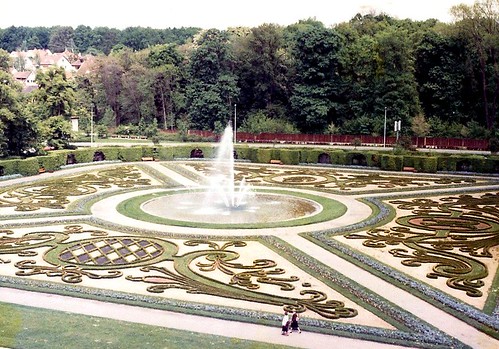
'Italian Gardens' at Ludwig's Palace, Germany 1981.
Image courtesy of Andrea_44 via Flickr.

The last few months, I’ve noticed what is almost a trend.  I’m loading groceries & kids into our vehicle, reprimanding for dawdling where there are cars and feeling utterly exhausted by the simple act of shopping.  And then, a kind gentleman offers to return my shopping basket.  Such a small thing, and yet lovely and memorable.  The first time it happened, I thought the guy was flirting.  (I guess I’m not used to strangers noticing the needs of a woman unless there’s an ulterior motive....shame on me.)  
Japanese Tea Garden, Golden Gate Park.
Image courtesy of moonlightbulb via Flickr

I should add that a few years ago, when I had small babies in the car, it was heartbreaking to leave the vehicle once they were secured for that small minute to return the basket.  And I became one of those inconsiderate people who didn’t return the basket, but left it to float in the parking lot until someone else returned it.  I’ve always wanted to be a person who left the world better than I found it, and there I was, cluttering the car park with shopping carts that little old ladies would probably run into.  
The small kindness was more than the sum of its parts: it was also saving me from being something I didn't want to be.


Imperfection is Better than Perfection


The main thing I don’t like about high Modernism is its perfection.  Not one hair out of place, surfaces that are impossible to maintain with use, exteriors that do not know how to weather well, interiors that look cluttered when actually lived in.

In Japan, there is a belief that perfection is not a virtuous goal.  It is prideful and vain.  Instead, the goal is WABI-SABI, where perfection is tempered with a purposeful element of nature or geometric imperfection.  It is almost a spiritual effort of humility: we know that we cannot create perfection, so we will not try.  

Again, the result is greater than its effort, because spaces defined by mathematical perfection cannot be ideal for humans.  Their beauty can be observed but not truly inhabited.  Wabi-sabi makes a space attainable, beautiful in ways that touch the soul.

Inspiring reading on the philosophies of Wabi & Sabi here. Wabi is the uncluttered austerity we so admire in Modernism; Sabi is the exquisite, textural patina of time.
For a multitude of images to communicate the idea, look here: I could look at these for days and days and days...  Though it seems that some think Wabi-sabi is merely the beauty of decay.  It is much more purposeful than that.

Originality At All Costs = Dishonesty

So many have been influenced by the aesthetics of Japan, there are too many to count.  One, however, was infamous for it: Frank Lloyd Wright.  He had a massive collection of Japanese WOOD BLOCK PRINTS that he collected on his travels (from the 1890s on), among other Japanese goods.  Japan’s decorative and architectural influence on him is astounding.  And yet...

There never was exterior influence upon my work either foreign or native, other than that of Lieber Meister, Dankmar Adler and John Roebling, Whitman and Emerson, and the great poets worldwide.  My work is original not only in fact but in spiritual fiber.  No practice by any European architect to this day has influenced me in the least.  As for the Incas, the Mayans, even the Japanese—all were to me but splendid confirmation” [quoted on page 27, Frank Lloyd: Europe and Beyond (1999)].

No doubt, he was a genius.  No one else could have done what he did with that influence.  But why genius has to go hand in hand with pride so often is a mystery to me.

Conclusion:  Lessons of Humility


The thoughts and needs of others are at least as important as our own.
Warmth in aesthetics is at least as important as cleanliness.
Admitting source material is not only honorable, but is a moral imperative.

-ally

CRITS, JURIES & CHARETTES

Crits

"Severus Snape on the set from HP6"
Image courtesy of  red_sunshinegirl
In architectural education, there is a culture of the CRITIQUE.  It starts out fairly mild each semester.  There is a professor over your course who lectures during the first class and perhaps even a little through the semester, but whose main job it is to wander among the drafting desks giving “crits” to each student, to spur them in their design.  (This can’t have changed much since I was in school, though the drafting is all the computer-based.)  


Ideally, these consist of timely questions, guidance, and perhaps even a quest for justifications for certain choices.  What it often was in my experience (and I have reason to believe this is fairly universal), was the equivalent of Professor Snape hovering and in his loudest whisper mocking students (except his favorites), one by one.


Juries

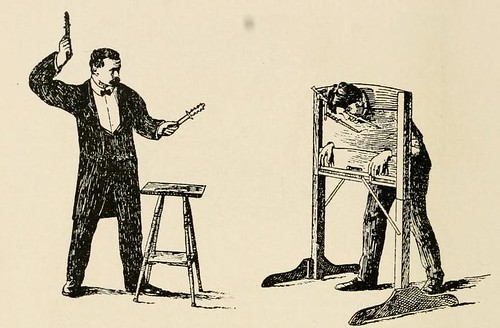
At the end of each semester (or each project, if less than the length of the semester), the students each stood in front of their class and a JURY (which consisted of their professor and other professors or professionals from the community or even visiting architects from the world at large who happened to be in town working on a project).  Ideally, these “juries” would be a hive of discussion as to appropriate responses to the site and program, more questions that hadn’t yet been put by the professor, and an additional quest for justifications. Yet they usually felt like this:

"The Pillory." Image courtesy of  Ephemeral Scraps via Flickr.

I’ve often wondered why!  I absolutely believe there should be justification for architectural choices, though what passed for “theory” (architecture’s version of philosophy) was laughable.  The justifications were so abstract as to be absurd, and their only qualification for acceptability was eloquence.  Though we often spoke of “how people would feel in a space,” these proposed feelings were riddled with angst as if the goal were high, incomprehensible art instead of PLACES of habitation.  
"I want visitors to feel pushed through the space as if squozen by a giant boa constrictor... and then released into the plaza as they realize they are going to live to see another day...."  
Okay, I made that one up, but it's not far-fetched.

Public Speaking & Teaching


This process has left me as an adult with a fairly healthy fear of public speaking that I am trying to battle.  I keep telling myself that most classes are not trying to pick apart everything the teacher says merely to look important themselves.  And I am finding that it’s true.  Most people actually go to classes to LEARN. What?!

The stunning contrast for me has been teaching Sunday School to a class of adults, many of whom are generations older than me.  Some are religious historians, some are lawyers with incredible insights on Biblical law, many have attended seminary and institutes of religion.  It is daunting to prepare a lesson for a group like that, knowing that many of them will see the multitude of errors I make at the outset.  But everyone is there to learn and to participate and teach one another. It's almost as if no one assumes they already know it all; as if every human being can learn from each other. 
As the teacher, I end up leading a respectful discussion with a variety of opinions and insights.  And everyone walks away feeling enriched, inspired, and bound together by the experience.  Wow. 

What if?

What if architecture school had been like that?  

Instead of promoting absurd, egocentric rhetoric under high pressure-- though I’m sure most architects end up needing that skill, too-- you might have collaboration, respect, and places that people actually want to be in.

Charettes

Out of school, at my first job, we occasionally had what are called in the architecture world “charettes.”  These were fairly wonderful.  We would drop all of our other projects, refuse to answer calls for a few hours (or even a whole day) and brainstorm collaboratively on one project.  This was usually a new project, though it was occasionally a competition or even urban design.  It required focus and an ability to listen to varying viewpoints and ideas without shooting them down (at least, at first).  The results were rarely less than stunning.  

Unfortunately, few design budgets would allow for such manpower early on, and so the charettes went unpaid. 
A charette during the early schematic phase seemed to be the best guarantee that a client would get something wonderful in the end; yet, it was seen as an extra extravagance. In my mind, a charette is rather like trying a bit of diplomacy before going straight to war: ALWAYS a good idea.


Future Architects

So what is it we are teaching future generations of architects? I hope it's not just the ability to stand tall in the face of verbal abuse, but the ability to explain and expound our ideas and ideals. 

-ally

It’s not our job to toughen our children up to face a cruel and heartless world.  It’s our job to raise children who will make the world a little less cruel and heartless.”  -- L.R. Knost


WHAT IS AN "AFFORDABLE" HOME?

It's somewhat ambiguous, but the definition of affordability has to be related to income, right? Income as well as other debt & ob...