
 |
| Allison Drinkwater "Miyajima" 1995 |
Ah, Japan...
Although it seems that a large number of Japanese youth
still look to America for inspiration, there is a much smaller number of
American youth who look to Japan.
Japoniphiles, perhaps?
 |
| Allison Drinkwater "Tori Detail" (1995) |
I spent just over a year in and around Hiroshima when I was
a young adult, and I am still mesmerized by what I saw there. Some of what I learned was so different than
my experience of America that it was shocking, some concepts were more subtle
and difficult to define, others have grown in depth over time.
These are just three:
These are just three:
Small Acts of Kindness Bring Peace to the World
To show great hospitality, you must anticipate your guest’s
requests. Honor is shown by giving them
the option of not having to ask for what they need. OMOI-YARI is to “do the thought” of someone
before they speak it. Pass the butter
when they pick up a roll at dinner. See
that someone is seeking a good parking spot and relinquish it even though you
are closer. Provide a light if
they are taking cigarettes out of their pocket.
Smile if they are having a rough day. In short, behave like a gentleman.
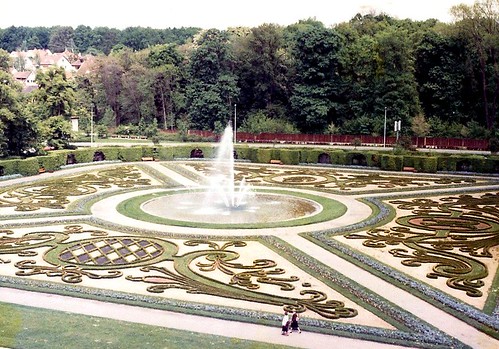 |
| 'Italian Gardens' at Ludwig's Palace, Germany 1981. Image courtesy of Andrea_44 via Flickr. |
The last few months, I’ve noticed what is almost a
trend. I’m loading groceries & kids
into our vehicle, reprimanding for dawdling where there are cars and feeling
utterly exhausted by the simple act of shopping. And then, a kind gentleman offers to return
my shopping basket. Such a small thing,
and yet lovely and memorable. The first
time it happened, I thought the guy was flirting. (I guess I’m not used to strangers noticing
the needs of a woman unless there’s an ulterior motive....shame on me.)
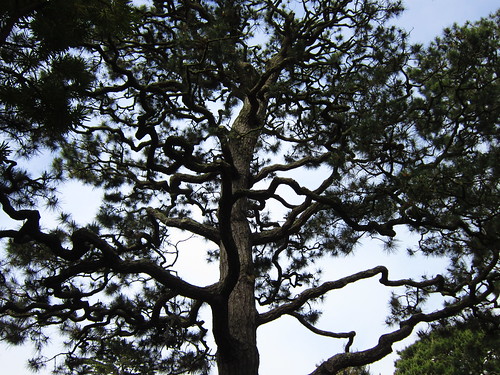 |
| Japanese Tea Garden, Golden Gate Park. Image courtesy of moonlightbulb via Flickr |
I should add that a few years ago, when I had
small babies in the car, it was heartbreaking to leave the vehicle once they
were secured for that small minute to return the basket. And I became one of those inconsiderate people who didn’t return the basket, but left it to float in the parking lot until someone
else returned it. I’ve always
wanted to be a person who left the world better than I found it, and there I
was, cluttering the car park with shopping carts that little old ladies would
probably run into.
The small kindness was more than the sum of its parts: it was also saving me from being something I didn't want to be.
Imperfection is Better than Perfection
The main thing I don’t like about high Modernism is its
perfection. Not one hair out of place,
surfaces that are impossible to maintain with use, exteriors that do not know
how to weather well, interiors that look cluttered when actually lived in.
 In Japan, there is a belief that perfection is not a
virtuous goal. It is prideful and
vain. Instead, the goal is WABI-SABI,
where perfection is tempered with a purposeful element of nature or geometric
imperfection. It is almost a spiritual
effort of humility: we know that we cannot create perfection, so we will not
try.
In Japan, there is a belief that perfection is not a
virtuous goal. It is prideful and
vain. Instead, the goal is WABI-SABI,
where perfection is tempered with a purposeful element of nature or geometric
imperfection. It is almost a spiritual
effort of humility: we know that we cannot create perfection, so we will not
try.
Again, the result is greater than its effort, because spaces defined by mathematical perfection cannot be ideal for humans. Their beauty can be observed but not truly inhabited. Wabi-sabi makes a space attainable, beautiful in ways that touch the soul.
 Inspiring reading on the philosophies of Wabi & Sabi here. Wabi is the uncluttered austerity we so admire in Modernism; Sabi is the exquisite, textural patina of time.
For a multitude of images to communicate the idea, look here: I could look at these for days and days and days... Though it seems that some think Wabi-sabi is merely the beauty of decay. It is much more purposeful than that.
Inspiring reading on the philosophies of Wabi & Sabi here. Wabi is the uncluttered austerity we so admire in Modernism; Sabi is the exquisite, textural patina of time.For a multitude of images to communicate the idea, look here: I could look at these for days and days and days... Though it seems that some think Wabi-sabi is merely the beauty of decay. It is much more purposeful than that.
 Originality At All Costs = Dishonesty

 So many have been influenced by the aesthetics of Japan,
there are too many to count. One,
however, was infamous for it: Frank Lloyd Wright. He had a massive collection of Japanese WOOD
BLOCK PRINTS that he collected on his travels (from the 1890s on), among other Japanese goods. Japan’s decorative and architectural
influence on him is astounding. And yet...
So many have been influenced by the aesthetics of Japan,
there are too many to count. One,
however, was infamous for it: Frank Lloyd Wright. He had a massive collection of Japanese WOOD
BLOCK PRINTS that he collected on his travels (from the 1890s on), among other Japanese goods. Japan’s decorative and architectural
influence on him is astounding. And yet...“There never was exterior influence upon my work either foreign or native, other than that of Lieber Meister, Dankmar Adler and John Roebling, Whitman and Emerson, and the great poets worldwide. My work is original not only in fact but in spiritual fiber. No practice by any European architect to this day has influenced me in the least. As for the Incas, the Mayans, even the Japanese—all were to me but splendid confirmation” [quoted on page 27, Frank Lloyd: Europe and Beyond (1999)].
No doubt, he was a genius. No one else could have done what he did with that influence. But why genius has to go hand in hand with pride so often is a mystery to me.
Conclusion: Lessons of Humility

The thoughts and needs of others are at least as important as our own.
Warmth in aesthetics is at least as important as cleanliness.
Admitting source material is not only honorable, but is a moral imperative.
Admitting source material is not only honorable, but is a moral imperative.
-ally



Just found this delightful Japanese board on Pinterest: http://www.pinterest.com/kyliedecastro/wabi-sabi-japan/
ReplyDeleteThanks for this. I think I'm going to work it into my next post! You rock! :)
ReplyDelete